Revision Checklist
A printable fiction revision checklist for clarity, scene purpose, escalation, continuity, character change, and ending payoff on a complete draft.
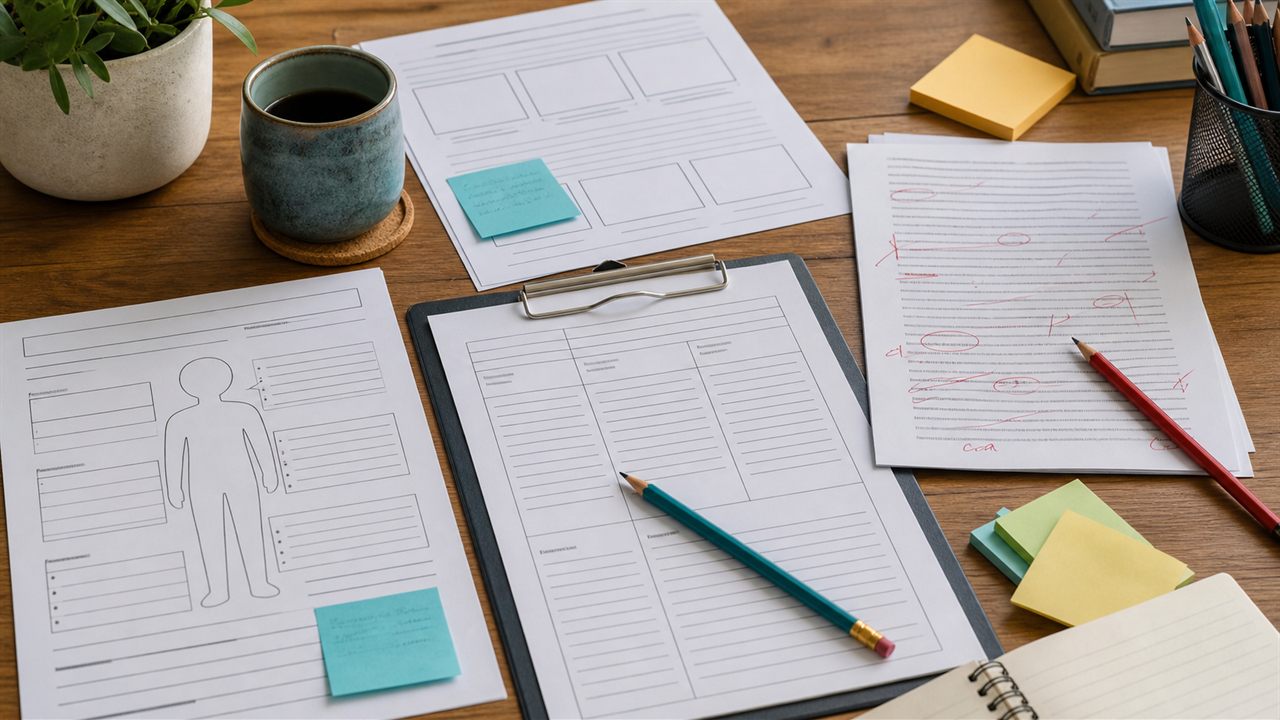
Use this checklist after a full draft exists. Work from large story questions toward sentence-level polish, so small edits do not hide structural problems.
Pick the version that matches the problem in front of you
Revision is the catch-all step, but it should still be a focused step. If the page below is not the right layer for the block in front of you, jump to a more specific page instead and return here when the draft is ready for the full pass:
- The draft is not finished yet. Use first draft checklist until the manuscript is complete enough for revision work.
- The premise still feels shaky even after a full draft. Run premise test and see whether the premise can carry a revision pass at all.
- The whole draft feels off-rhythm. Use pacing checklist before opening individual scenes.
- One scene keeps stalling the manuscript. Move to scene revision checklist and return here only when that scene holds.
- The conversation feels flat even though structure works. Move to dialogue revision checklist and return here after the dialogue pass.
- Backstory keeps slowing the draft. Move to flashback planning worksheet and cut or relocate the memories that do not change the present scene.
- The last chapter is the only unresolved chapter. Move to ending revision questions and only re-open the full manuscript if the ending still does not land after that focused pass.
- The point-of-view camera keeps slipping. Move to narrative point of view guide and reset the camera before doing structural passes.
- The character arc does not show up in action. Use character arc worksheet alongside this checklist.
- The setting has lost pressure across the manuscript. Cross-check with worldbuilding checklist so revision can decide what to keep, sharpen, or cut.
- A new prompt would help test the weakest beat. Pull one from writing prompts by genre and pressure type and rewrite the weakest scene around it.
If the draft is technically clear but does not seem to add up emotionally, run story theme questions before the scene-by-scene pass. That can reveal which scenes should echo, challenge, or complicate the central pressure.
If the draft keeps slipping between first person, close third, distant summary, or too many witnesses, use the narrative point of view guide as a separate pass before line editing.
If the draft slows down whenever backstory appears, use the flashback planning worksheet to decide which memories change the present action and which can be cut, moved, or reduced.
If the broad structure mostly works but the final chapter does not land, use the ending revision questions as a focused pass on payoff, final choice, cost, and the last image.
Story clarity
The opening makes the central character, pressure, and promise clear:
The reader can track what the protagonist wants in each major section:
The main conflict becomes harder, not just longer:
The midpoint changes information, power, or stakes:
The ending answers the story's main dramatic question:
Scene purpose
Each scene has a character objective:
Each scene introduces an obstacle, pressure, or new information:
Each scene ends with a changed situation:
Scenes with repeated emotional beats have been combined or sharpened:
Transitions make time, place, and cause clear enough to follow:
Character and continuity
Main character choices create consequences:
Character change is visible in action, not only summary:
Important objects, promises, clues, and injuries remain consistent:
Secondary characters affect the plot instead of only reacting:
The final image or beat reflects what has changed:
Pacing and emphasis
Important turns receive enough page space to feel earned:
Low-pressure scenes either reveal character, change relationships, or have been shortened:
Backstory appears when it changes the present scene:
Repeated information has been removed unless repetition creates tension:
Chapter or scene endings give the reader a reason to continue:
Language pass
Vague emotion labels have been replaced with specific behavior where useful:
Dialogue tags and action beats are clear without overexplaining tone:
Important images, objects, or phrases return with changed meaning:
Paragraphs vary in rhythm during high-pressure moments:
The final proofread is separate from structural revision:
Final pass order
Revise in this order: structure, scenes, continuity, paragraphs, sentences, proofread. If a late checklist item exposes a structural issue, go back up the list. That loop is normal; it means the draft is becoming clearer.
If the broad checklist points to one weak scene, switch to the scene revision checklist before rewriting the surrounding chapters. If the scene structure holds but the conversation still feels flat, switch to the dialogue revision checklist for a focused pass on speaker goal, subtext, voice rhythm, and exit pressure. If the last chapter is the only unresolved problem, switch to ending revision questions before reopening the full draft.
Where to go after the full pass
When the full pass is complete, use one of these exit pages to make sure the manuscript lands somewhere readers can find:
- Turn the strongest pressure from the revision into a first line prompt or a last line prompt so future drafts can open or close faster.
- Send the protagonist into a character arc worksheet to confirm that the final version still has visible change.
- Pull one rebuilt scene into a plot outline worksheet pass if the revision exposed a missing midpoint turn.
- Cross-check any new setting rules against worldbuilding checklist before considering the manuscript ready for outside readers.
- If the revision uncovered a fresh story idea, return to premise test instead of starting a messy draft too quickly.