Story Premise Test Worksheet
A printable story premise test worksheet for checking pressure, character fit, scope, stakes, and draft momentum before outlining.
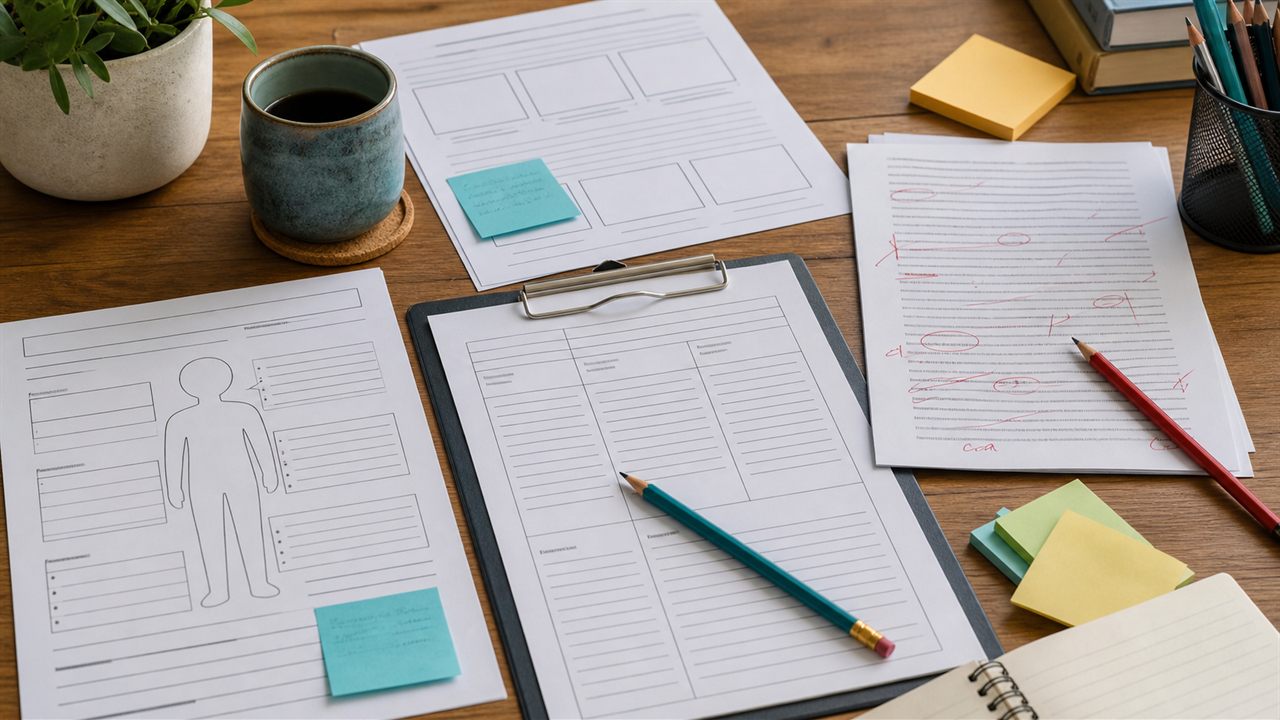
Use this worksheet when an idea sounds appealing but still feels cloudy. A strong premise gives the writer a person, a problem, a pressure point, and a reason to keep drafting.
This test is intentionally stricter than a brainstorming page. A story seed can be charming and still not be ready. The goal is to find the missing pressure before you spend weeks drafting around a soft center.
If you came from the homepage or Story Craft
Pick the version of this worksheet that matches what the idea still lacks. If the page below solves a different block than the one in front of you, jump straight to the matching page instead of forcing the same test:
- The character is the weak spot. Switch to character motivation ideas and bring back one clear want, fear, and cost before retesting the premise.
- The opening is missing. Move to opening scene ideas and only return here after you can picture the first scene.
- The idea has no engine. Use story theme questions to find the deeper question the premise keeps avoiding.
- The premise keeps ballooning. Stop and run story idea evaluation to see whether the idea is one story or several.
- The premise is ready and you need momentum. Move to plot outline worksheet and only come back when the outline feels stuck again.
- You already have a draft but the last chapter falls flat. Skip ahead to ending revision questions before reworking the premise.
- You still need a starting prompt. Browse writing prompts by genre, line, and pressure type and bring one back into the premise sentence test.
Premise sentence
Who is the central character?
What do they want in concrete terms?
What changes first?
What makes waiting impossible?
What promise does the premise make to the reader?
Pressure test
What choice does the premise force?
What is the cost of the obvious solution?
Who opposes, misunderstands, or needs the character?
What can go wrong by the midpoint?
What becomes harder because of the protagonist's own choice?
Draft readiness
First scene image:
Likely ending question:
Biggest research or planning gap:
Small next drafting step:
Worksheet to use next:
Pass or revise
If the premise does not produce a first scene, add a deadline, witness, rule, promise, or physical obstacle.
Premise formula
Try this sentence:
When [change] disrupts [character’s ordinary pressure], they must [specific action] before [consequence], but [personal complication] makes the obvious solution costly.
If the sentence becomes too long, the premise may be carrying several stories. Split it into smaller versions and test each one separately.
Red flags
- The premise describes a world but not a character under pressure.
- The protagonist can walk away without losing anything meaningful.
- The conflict depends on everyone refusing an easy conversation.
- The first scene is only explanation.
- The ending question is the same as the opening question.
Strengthening moves
Add one of these if the idea feels weak:
- A deadline that matters emotionally, not only logistically.
- A witness who changes what the character is willing to risk.
- A rule that makes the best solution forbidden.
- A promise the character cannot keep without changing.
- A secret that solves one problem and creates another.
Compare two versions
Write two premise sentences for the same idea. In version A, make the external stakes bigger. In version B, make the personal cost sharper. The better version is usually the one that suggests a clearer first scene.
Printed-page pass
After filling the page, underline only three answers: the forced choice, the cost of the obvious solution, and the first scene image. If those three do not connect, revise the premise before expanding the outline.
What to do after the worksheet
Use the worksheet as a gate, not a finished product. Once the three underlined answers connect, send the idea into the next focused page:
- The premise sentence is sharp and the first scene image is concrete. Move to plot outline worksheet and map the pressure across the full draft.
- The pressure is sharp but the protagonist still feels generic. Run character motivation ideas until the character can refuse the obvious solution.
- The pressure is sharp but no theme question shows up. Use story theme questions to find the deeper argument the premise keeps avoiding.
- The premise is solid but the writer still hesitates. Print first draft checklist and use it to commit to a messy first pass.
- The premise is rejected after two passes. Use scene revision checklist on an existing scene to test the rejection against real prose before abandoning the idea.