Writing Tools and Generators
Browser-only writing tools for prompts, character ideas, plot twists, and setting seeds tied to the resource library.

Tools should help writers combine constraints quickly without replacing judgment. Each generator points back to guide pages so the output can become a scene, outline, or worksheet entry.
The current tools use reviewed static datasets in the browser. They are intentionally lightweight: useful for creative friction, but not positioned as a live AI writing service.
Pick a tool, then finish the result
- Need a first idea? Use the prompt randomizer, then choose a path from writing prompts or plan the draft with the scene planning worksheet.
- Need a person for the scene? Use the character idea generator, then test the result with the character profile worksheet.
- Need a fair turn? Use the plot twist generator, then check clues and consequences with revision questions for plot.
- Need a place with pressure? Use the setting seed generator, then build rules and obstacles from worldbuilding or setting conflict ideas.
- Need a printable follow-through path? Go straight to worksheets after the roll.
Browser-only tools
 Prompt randomizer
Genre, character pressure, conflict, setting, and constraint combinations.
Prompt randomizer
Genre, character pressure, conflict, setting, and constraint combinations.
 Character idea generator
Role, goal, strength, flaw, and pressure combinations.
Character idea generator
Role, goal, strength, flaw, and pressure combinations.
 Plot twist generator
Fair reveal structures with clue and cost prompts.
Plot twist generator
Fair reveal structures with clue and cost prompts.
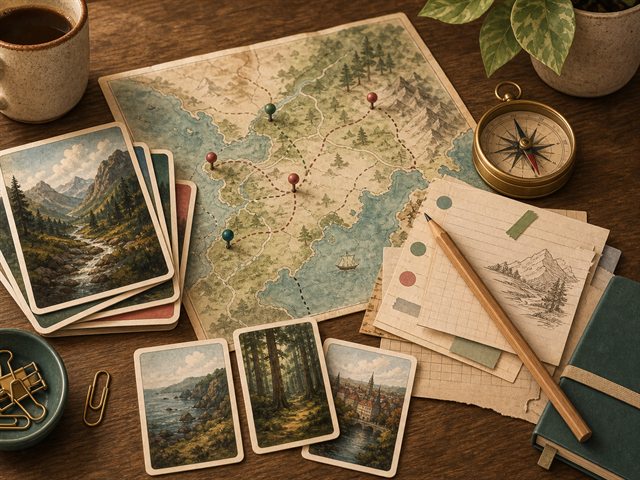 Setting seed generator
Places, rules, pressures, and sensory details.
Setting seed generator
Places, rules, pressures, and sensory details.
No account, server storage, payment flow, or ad code is part of the current static tool plan. Site traffic may be measured with Google Analytics, but generated tool output is not submitted to Story Draft Lab.
Turning output into writing
Treat each generated result as a draft ingredient, not a finished premise. After rolling a combination, choose one detail to keep, one detail to complicate, and one detail to remove. Then write a one-paragraph scene setup or move to a worksheet.
Each tool includes a copy action for moving a result into local notes. If clipboard access is unavailable in a browser, the result remains visible so it can be selected and copied manually.
Useful follow-up paths:
- Prompt results pair well with writing prompts and scene writing prompts.
- Character results pair well with character arc templates and relationship dynamics.
- Plot twist results pair well with clue ideas and revision questions for plot.
- Setting seeds pair well with worldbuilding and setting conflict ideas.
When to reroll
Reroll when the result repeats a story you already know, leans on a protected fictional world, or gives you pressure without a choice. Keep a result when it suggests a scene you can actually draft in ten minutes.
If a combination is close but not useful, change one ingredient instead of rerolling everything. A weak setting can become stronger with a clearer rule; a weak character can become stronger with a sharper cost; a weak plot twist can become stronger with an earlier clue.