Scene Planning Worksheet for Drafting Scenes
A printable scene planning worksheet for turning one draft moment into an objective, obstacle, turn, image, and next consequence.
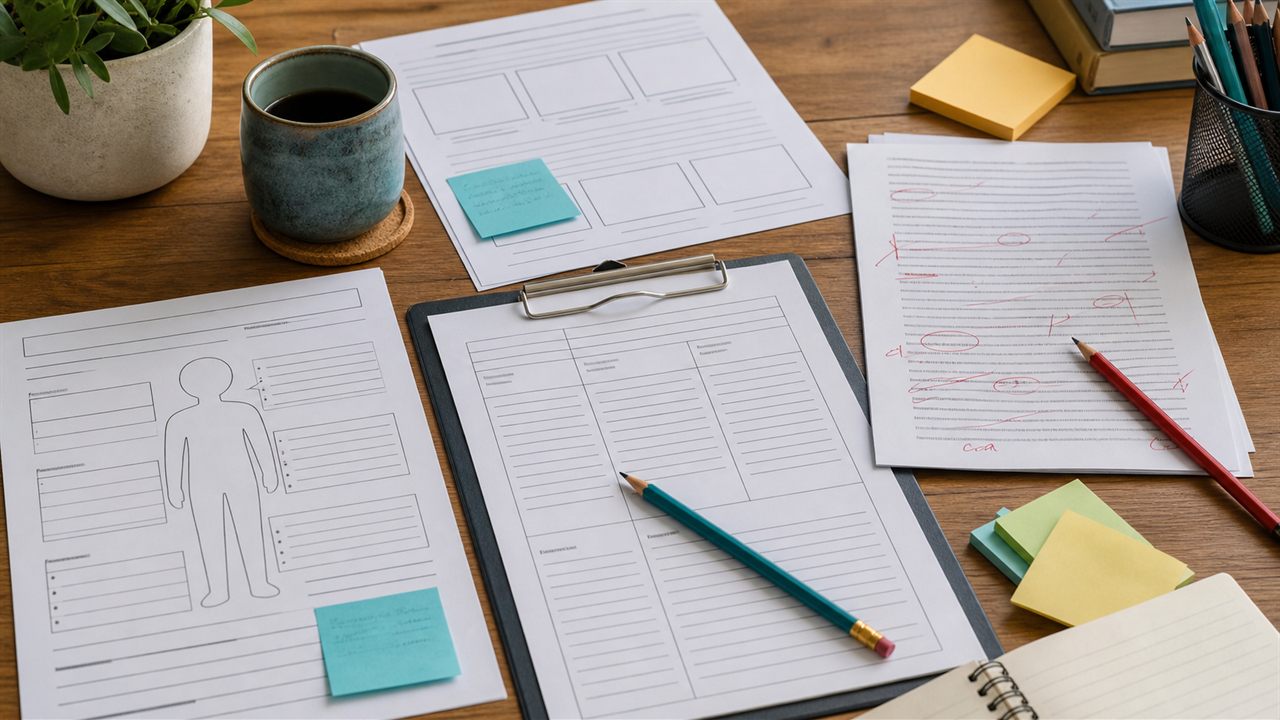
Use this worksheet when a scene feels pleasant but static. A scene does not need explosions, but it should change what someone can do, believe, hide, or risk.
Plan lightly. The worksheet is most useful when it gives the scene a direction, not when it locks every line before drafting.
If the scene feels confusing because too many minds are visible, choose the witness first with the narrative point of view guide. If the scene has action but no emotional point, use story theme questions to name what the scene should test before planning the beats below. If the place is present but inert, use setting description exercises after naming the scene objective.
Fast route
- Starting from a blank session: set the timer and finish line with the writing session planner, then return here for the scene beats.
- Planning chapter one: use the opening chapter checklist first so the scene carries the story promise.
- Conversation is the main event: draft the scene plan here, then use the dialogue revision checklist after the first pass.
- Need a seed before planning: browse scene writing prompts or the prompt randomizer and choose one pressure, not a whole premise.
Scene setup
Point-of-view character:
What they want before the scene starts:
Why this must happen now:
Where the scene takes place:
One sensory detail to anchor the scene:
Pressure and turn
Obstacle, opponent, or complication:
What the character tries first:
What goes differently than expected:
Choice made under pressure:
Information revealed or hidden:
Scene texture
These details keep the scene from becoming a plot summary. Choose details that can do more than decorate the page.
Object, sound, or image that can repeat later:
Gesture that reveals emotion indirectly:
Detail the viewpoint character misreads:
Line of dialogue with a second meaning:
Physical action that interrupts explanation:
Exit state
What changes by the end?
Who has more power now?
What consequence follows into the next scene?
Line, image, or action to end on:
Drafting rule
If two consecutive scenes end with the same emotional or practical situation, merge them or make the second one create a sharper consequence.
After drafting, use the scene revision checklist to test whether the scene’s objective, pressure, turn, and exit are visible on the page.
If the plan depends on one conversation, draft the scene first and then use the dialogue revision checklist to check speaker goals, subtext, and exit pressure.
Revision questions
- What would the reader misunderstand if this scene were removed?
- Which line, decision, or discovery changes the next scene?
- Is the conflict happening now, or is the scene only discussing earlier conflict?
- Does the viewpoint character leave with a different plan, mood, secret, or relationship?
- Can one paragraph of explanation become an action, interruption, or object?
Follow-through paths
Once the scene exists, route the problem instead of revising everything at once:
- Scene revision checklist if the objective, pressure, or exit turn is hard to see.
- Dialogue revision checklist if characters say what they mean too directly.
- Chapter planning worksheet if the scene works alone but does not hand off to the next chapter.
- Conflict ideas if the scene has atmosphere but no resistance.
- Setting description exercises if the setting is present but not changing the choices.