Writing Session Planner for Focused Drafting
A printable writing session planner for turning a vague draft problem into a focused scene, revision, or planning task.
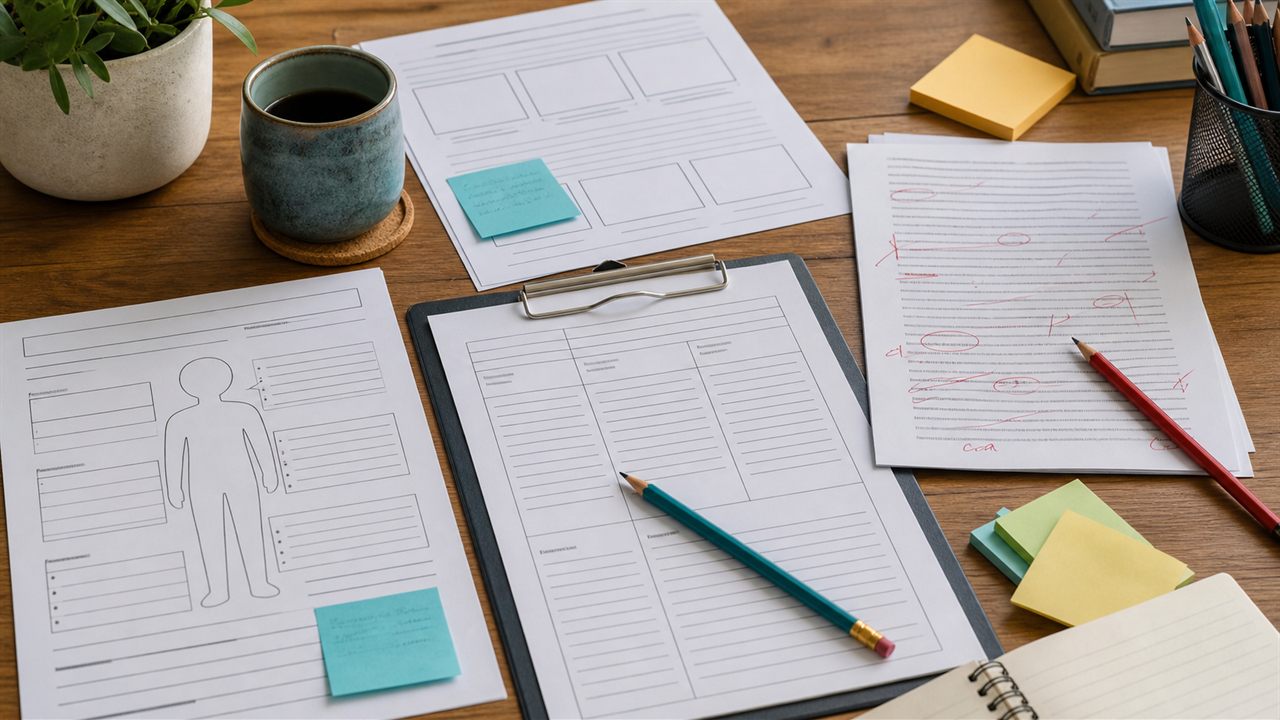
Use this worksheet before a short writing session. The aim is not to plan the whole project; it is to make the next hour easier to begin and easier to resume later.
If you came from the homepage or the Worksheets hub with only a vague problem, choose the closest route before filling the page:
- Need words on the page: use this planner, then start with first line prompts if the opening sentence is the blocker.
- Scene is the next unit: plan one exchange with the scene planning worksheet before the timer starts.
- Chapter feels shapeless: use the chapter planning worksheet to define the chapter turn first.
- Existing draft needs repair: choose scene revision, dialogue revision, or ending revision questions instead of doing another broad reread.
Best use
Use the planner when you have limited time, a messy draft, or too many possible next steps. It works especially well for 25-minute, 45-minute, and 90-minute sessions because it asks for one finish line instead of a heroic promise.
Good session goals are concrete:
- Draft the argument between the sisters through the moment one leaves.
- Rewrite the scene opening so the setting carries more tension.
- List three possible reveals for the locked room clue.
- Fill in the missing beat between the midpoint and the next setback.
Weak session goals usually sound broad: “fix chapter four,” “write more,” or “make it better.” Translate those into one visible action before starting.
Before the session
Project or story:
Today's scene, page, or problem:
Smallest useful finish line:
Constraint to reduce overthinking:
Timer length or stopping point:
During the session
What changed in the scene?
What did the character want?
What got harder?
What line, image, or decision should be kept?
What should be marked instead of fixed today?
After the session
Next action:
Question to answer later:
One thing not to revise yet:
First sentence, beat, or note for next time:
Session rule
End by writing the next sentence, bullet, or scene question. Future-you deserves a better handoff than a blank page.
Three session modes
Drafting mode
Choose drafting mode when the scene is still missing words. Do not solve every structure problem first. Pick the next visible moment, write through it, and mark uncertain details in brackets.
Useful constraints:
- No rereading beyond the previous paragraph.
- No naming research during the session.
- Dialogue first, description later.
- Stop at a decision, not at the end of your energy.
Revision mode
Choose revision mode when the scene exists but feels flat, confusing, or slow. Read once for the main problem, then choose a narrow pass.
Revision passes can focus on:
- The character’s want in each exchange.
- The first line and last line of the scene.
- Replacing explanation with action.
- Cutting repeated beats that make the same point.
Planning mode
Choose planning mode when you are avoiding the draft because the next move is unclear. Keep the plan small enough that it turns into writing immediately.
Planning outputs can be:
- A five-beat scene outline.
- A list of three possible complications.
- A new question for the antagonist.
- A map of what the reader knows versus what the character knows.
After-session review
Before closing the document, write a two-line handoff:
- What changed today?
- What should happen first next time?
This keeps continuity without turning every session into a full project review.
Repair routes
If the session ends without a useful next step, do not blame the timer. The task was probably too wide. Use one of these narrower follow-throughs:
- Plot outline worksheet if the session exposed a missing cause-and-effect path.
- Opening chapter checklist if the first pages still do not make a clear promise.
- Story theme questions if the work has events but no pressure on a belief.
- Scene revision checklist if the session produced words but no visible turn.
- Dialogue revision checklist if the best material is a conversation that needs sharper goals and subtext.
Printed-page tip
If this worksheet is printed, fold or mark the bottom handoff section before starting. The small physical reminder makes it harder to end the session with a vague promise instead of a usable next step.