Setting Conflict Ideas
Setting conflict ideas for worldbuilding, including borders, resources, customs, infrastructure, geography, and public rules.
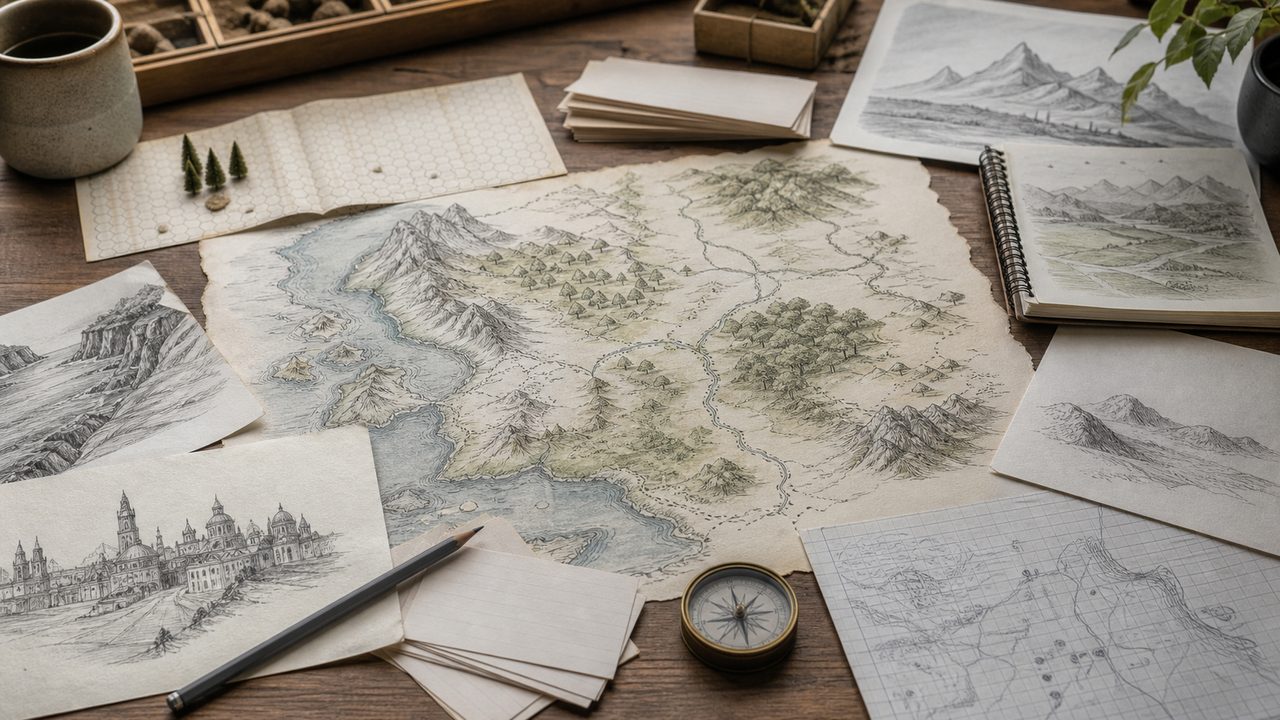
Setting conflict happens when the world itself makes a good choice expensive. The pressure can come from weather, law, distance, language, money, custom, or public memory.
Once you choose the pressure, use the setting description exercises to make readers feel it through blocked movement, changed sound, crowd behavior, weather consequences, or one detail the viewpoint character misreads.
When the pressure comes from public memory, use the worldbuilding timeline worksheet to identify the old event, the official version, the private version, and the present rule that still hurts someone.
Conflict starters
- A bridge is safe only during one hour of the tide.
- A border town profits from a rule both capitals publicly condemn.
- A water source is shared by communities with incompatible calendars.
- A festival closes every road on the day help must arrive.
- A mine, archive, temple, or observatory is useful and slowly poisoning the town.
- A legal title matters more than actual skill during a crisis.
- A mountain pass belongs to nobody until snow makes it valuable.
- A city district is easy to enter and almost impossible to leave unnoticed.
- A trade language hides insults that literal translation misses.
- A map is accurate for officials and dangerous for everyone else.
Sources of pressure
Use more than one kind of setting pressure so the conflict feels lived-in instead of decorative.
- Geography: distance, cliffs, rivers, marshes, snow lines, islands, deserts, or underground routes.
- Infrastructure: gates, roads, ferries, wells, lifts, signal towers, markets, archives, or power grids.
- Custom: hospitality rules, inheritance habits, dress codes, mourning periods, greetings, or feast obligations.
- Law: permits, curfews, border papers, voting rights, property claims, professional licenses, or religious courts.
- Public memory: old betrayals, heroic myths, inherited shame, ruined districts, or a disaster nobody agrees how to name.
Escalation options
- Make the setting rule inconvenient early and costly later.
- Let one character understand the local rule while another dismisses it.
- Turn a safe route into the wrong route once the protagonist’s goal changes.
- Reveal that a neutral location is neutral only because powerful people benefit from that fiction.
- Give the antagonist better access to the setting’s hidden systems.
History-to-conflict check
Choose one past event and attach it to a current obstacle:
- A treaty becomes a permit problem at a border gate.
- A heroic myth becomes pressure to repeat a dangerous mistake.
- A disaster anniversary closes roads on the day the protagonist needs speed.
- A renamed district hides evidence until an older character uses the old name.
- A public memorial forces two groups into the same square before either side is ready.
Pressure check
Ask who benefits from the setting as it currently works. Then put the protagonist on the side that has less time, less proof, or less permission.
If the conflict still feels conceptual, write one paragraph where the setting physically interrupts the protagonist before anyone explains the rule. A locked gate, wet paper, echoing stairwell, public clock, missing sign, or crowded doorway can carry the pressure before dialogue names it.