Worldbuilding Timeline Worksheet
A printable worldbuilding timeline worksheet for history, public memory, turning points, and present-story consequences.
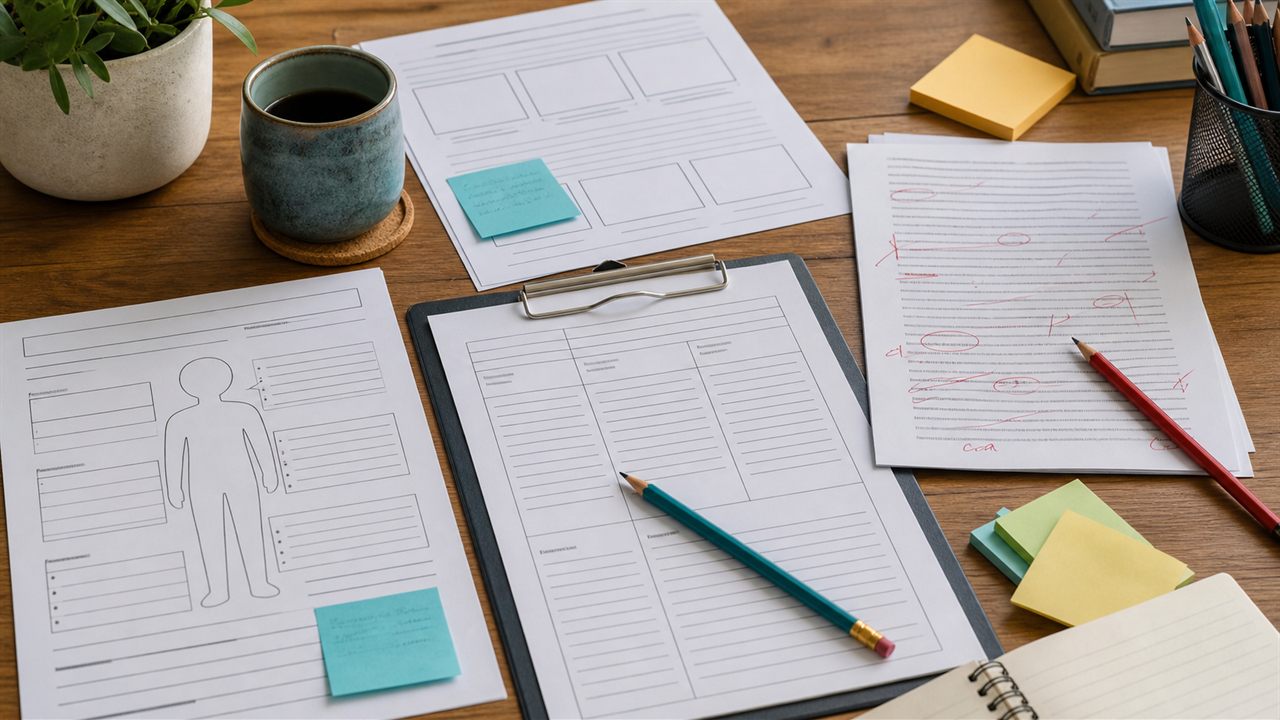
Use this worksheet when a setting has a lot of history but the draft does not yet know which events matter. A worldbuilding timeline should not become a textbook. It should explain why people in the present scene disagree, fear, celebrate, hide, obey, or revolt.
Start with the current story problem. Then work backward only far enough to find the events that still create consequences.
Timeline purpose test
Answer these before listing eras.
Present story problem affected by history:
Group, family, city, guild, kingdom, colony, or faith shaped by that history:
Official version people are taught:
Private version some people still remember:
Current rule, feud, border, shortage, custom, or fear caused by the past:
If the timeline mainly explains government power, pair it with government prompts. If it mainly explains customs, names, holidays, or shame, pair it with culture prompts. If it changes routes and borders, use fantasy map planning questions as the next pass.
Five-event setting timeline
Keep the first pass short. Choose five events that still change the present.
Founding, arrival, discovery, migration, or first bargain:
Prosperity, invention, alliance, reform, or golden-age claim:
War, disaster, betrayal, exile, collapse, plague, or broken promise:
Cover story, treaty, law, myth, border, or ritual created afterward:
Recent event that brings the old conflict back into the story:
The middle event does not need to be violent. A marriage, invention, school reform, trade route, failed harvest, new calendar, religious split, or changed inheritance rule can create enough pressure if people still live with the result.
Memory and contradiction
Fictional history becomes useful when not everyone agrees about it. Give the same event at least two meanings.
Event everyone names:
How the powerful describe it:
How an ordinary household describes it:
How an outsider misunderstands it:
What object, song, building, scar, debt, route, or holiday keeps the event visible:
This is where a timeline stops being background. A monument can become a meeting place. A holiday can become a protest risk. A ruined bridge can become the reason one district is poor and another is protected.
Present-scene consequences
For each timeline event you keep, attach a visible consequence.
- A law someone obeys even when no guard is present.
- A family name that opens doors in one place and closes them in another.
- A route people avoid because of what happened there.
- A public celebration that embarrasses, excludes, or pressures someone.
- A shortage, debt, tax, curfew, oath, border, title, or taboo that changes a scene choice.
- A false story the protagonist believes until evidence breaks it.
Drafting order
- Write the present scene first, even roughly.
- Mark the point where history changes a choice.
- Add only the timeline detail needed for that choice.
- Save extra eras, rulers, wars, and family trees for private notes.
- Recheck the scene with the worldbuilding checklist.
If the timeline supports the story’s meaning rather than only its facts, use story theme questions to connect the past event to the final choice.
Revision checks
- Does every kept event create a present consequence?
- Can the reader feel history through action, place, object, custom, or conflict?
- Does at least one character believe a version of history that is incomplete?
- Is the timeline short enough to remember while drafting?
- Could one remembered image or public ritual do the work of a long explanation?
- Does the story change because of the past, not merely mention it?