Fantasy Map Planning Questions for Story Routes
Fantasy map planning questions for fantasy writers who need routes, borders, resources, and travel choices to shape plot pressure.
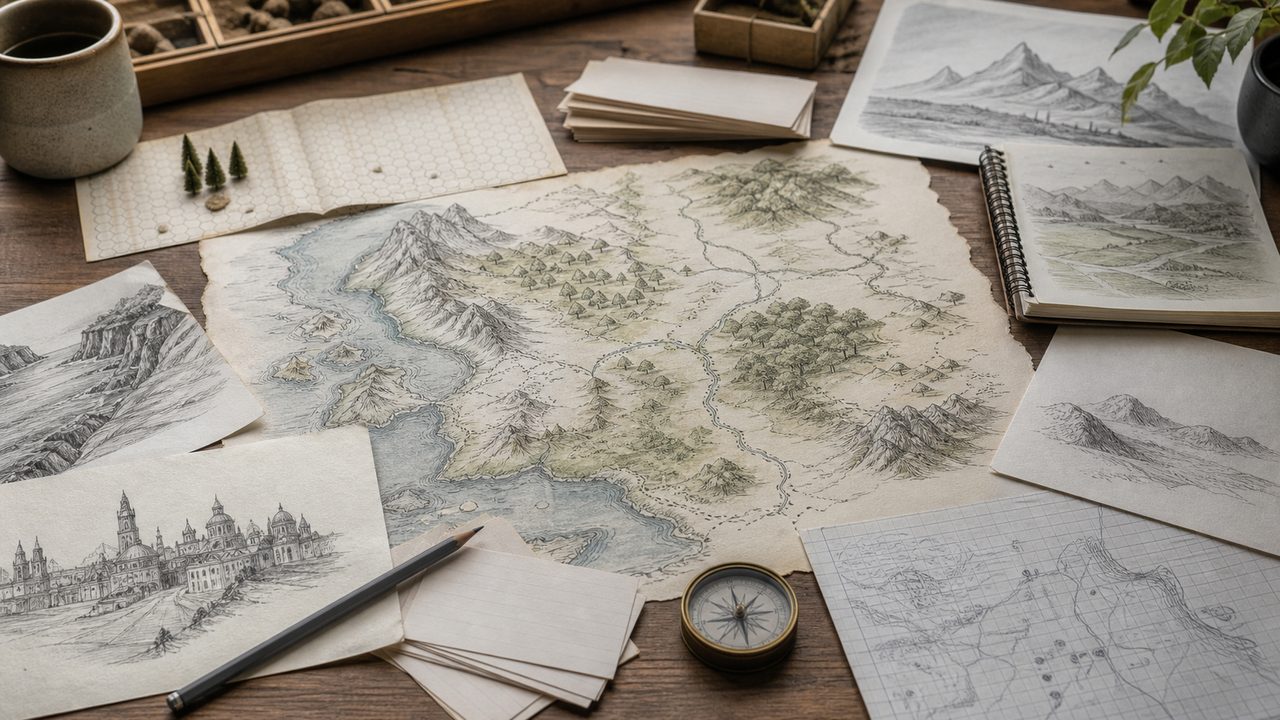
A fantasy map is useful when it changes what characters can do. The goal is not to draw every river perfectly. The goal is to make distance, borders, weather, food, routes, and danger matter on the page.
If a border, ruined road, renamed city, or forbidden crossing comes from old conflict, sketch the short cause-and-effect chain with the worldbuilding timeline worksheet before drawing more locations.
Choose the map problem first
- If the story feels like easy travel, build one route with a physical cost and one route with a political cost.
- If the setting feels decorative, turn one landmark into a scene obstacle with the setting description exercises.
- If the conflict feels abstract, connect a border or supply route to story stakes and conflict ideas.
- If the map has many names but little history, use the worldbuilding timeline worksheet before adding more kingdoms.
Start with story movement
Answer these before naming every region:
- Where does the protagonist begin?
- Where do they need to reach?
- What route looks easiest at first?
- What makes that route expensive, watched, taboo, flooded, cursed, taxed, or politically dangerous?
- What second route creates a different kind of cost?
If the map offers only one obvious path, add a tradeoff. A dangerous pass, a slow river route, a hostile border, and a costly sea crossing all create different story choices.
Border questions
- Which border is official, and which border do locals actually respect?
- Who profits when people cross it?
- Who is punished for crossing it?
- What goods, people, books, relics, or animals are forbidden to move through it?
- Which border looks natural but is really political?
- Which border was drawn after a war, marriage, treaty, disaster, or betrayal?
Settlement questions
For each major town, city, shrine, fortress, or port, answer:
- Why was this place built here?
- What does it control: water, trade, defense, worship, labor, knowledge, or shelter?
- What does it lack?
- Who arrives here unwillingly?
- Who cannot afford to leave?
- What rumor would spread from here faster than an army?
Route questions
- Which road is fastest but least private?
- Which route is safest for merchants but dangerous for fugitives?
- Which crossing closes during part of the year?
- Where do travelers have to ask permission?
- What place forces enemies to share shelter?
- What local rule must outsiders learn quickly?
Resource questions
Resources create pressure because people need them.
- What does one region have that another region cannot survive without?
- What resource is running out?
- What resource is sacred, illegal, or controlled by one family?
- What resource can be moved easily, and what resource ties power to one place?
- What happens when weather, war, magic, or disease interrupts supply?
Revision check
Choose three map details and connect each one to a scene:
- A place that delays the protagonist.
- A route that forces an alliance.
- A border, resource, or terrain feature that changes the final plan.
If a location does not affect a choice, it can stay vague until the story needs it.
Repair route
When the map still feels like background art, revise in this order:
- Mark the safest route, fastest route, and most secret route. Give each one a different cost.
- Pick one settlement and answer the city or town questions for what it controls and what it lacks.
- Add one public rule from government prompts or one inherited custom from culture prompts that changes who can cross a border.
- Draft the next travel scene with the scene planning worksheet so the map detail becomes a choice, not a note.