Geography Prompts for Worldbuilding
Geography prompts for designing terrain, routes, borders, weather, and distance that create story consequences.
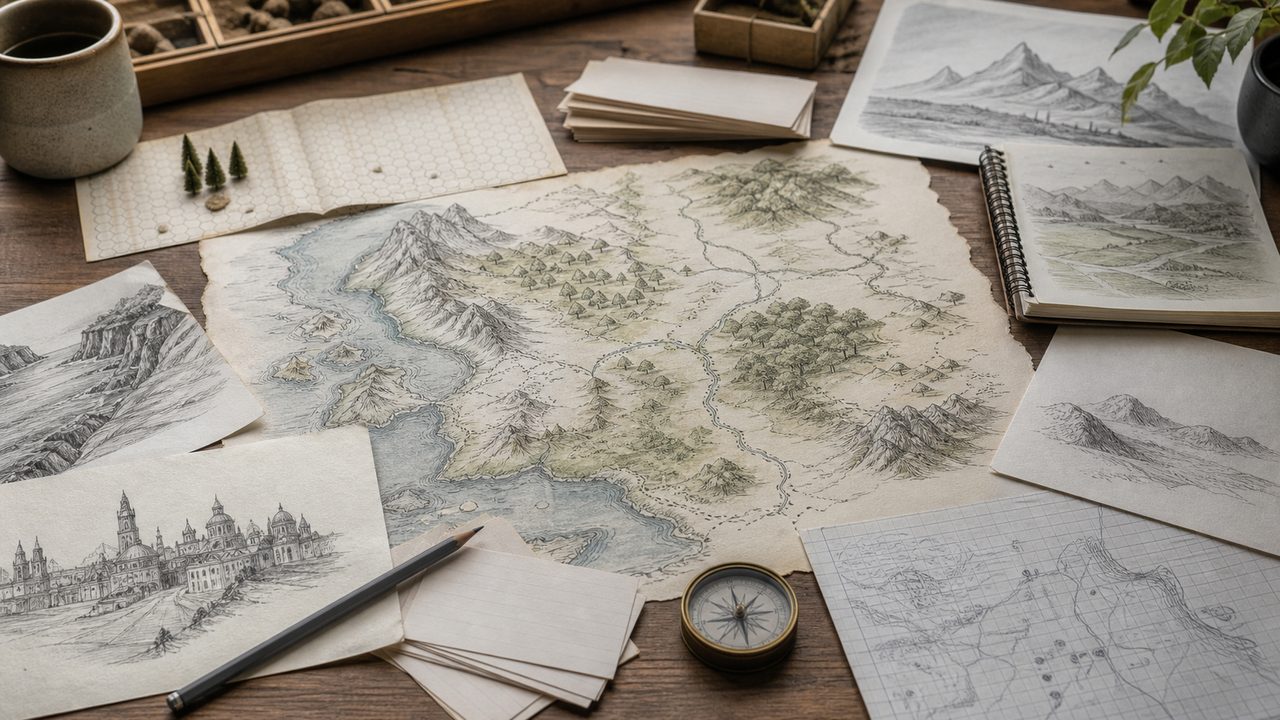
Geography is not scenery alone. It decides how long help takes, what people fear, where power gathers, and which choices are possible.
If the map already works but the scene still feels abstract, use the setting description exercises to turn distance, weather, landmarks, and blocked routes into action on the page.
If a road, border, ruin, or route matters because of something that happened before the story begins, use the worldbuilding timeline worksheet to turn that past event into present pressure instead of a history lecture.
Geography questions
- What natural barrier shapes the map: river, desert, reef, mountain, forest, storm belt, or ice field?
- Which route is fastest, and why is it dangerous?
- Where do people gather because water, shade, shelter, or trade is reliable?
- What border looks obvious on a map but confusing on the ground?
- Which season changes the rules of travel?
- What place is easy to defend but hard to feed?
- What place is considered unlucky because of a past disaster?
- Which community controls a bridge, pass, harbor, lift, tunnel, or signal tower?
- Where do messages, rumors, and goods move fastest?
- What location forces enemies to cooperate?
- What place looks close on a map but takes days to reach safely?
- Which route is legal, and which route do locals actually use?
- Where does bad weather turn private mistakes into public emergencies?
- Which landmark has different meanings for travelers, soldiers, children, and merchants?
- What valuable place cannot grow enough food for its own people?
Geography pressure ideas
- A pass closes early, trapping a delegation on the wrong side of a border.
- A river changes course and moves the argument over land with it.
- A coastal town hears news fast but cannot keep secrets.
- A mountain shrine is politically neutral because everyone needs its shelter.
- A desert road makes water carriers more powerful than nobles.
- A bridge toll forces the protagonist to choose between speed and secrecy.
Map revision check
Trace the path of a message, a meal, and a wounded person through the setting. If all three move with equal ease, the geography may not be doing enough story work yet.
Then trace one remembered event through the same map. Ask where people still avoid a route, rename a street, guard a bridge, celebrate a crossing, or argue about who owns the place. If the answer changes current travel, trade, or safety, add it to the timeline worksheet and keep it visible in scenes.
Scene use
Make distance matter. A warning arrives late, a supply cart must choose the long safe road, or a private meeting becomes public because there is only one warm room in winter.
For revision, pick one geography detail and describe it through a character’s movement: a climb that steals breath, a river crossing that exposes them, a market route that forces them past someone they hoped to avoid, or a storm line that changes who can arrive in time.