Flashback Planning Worksheet
A printable flashback planning worksheet for placing memory, backstory, timing, point of view, and present-scene consequences.
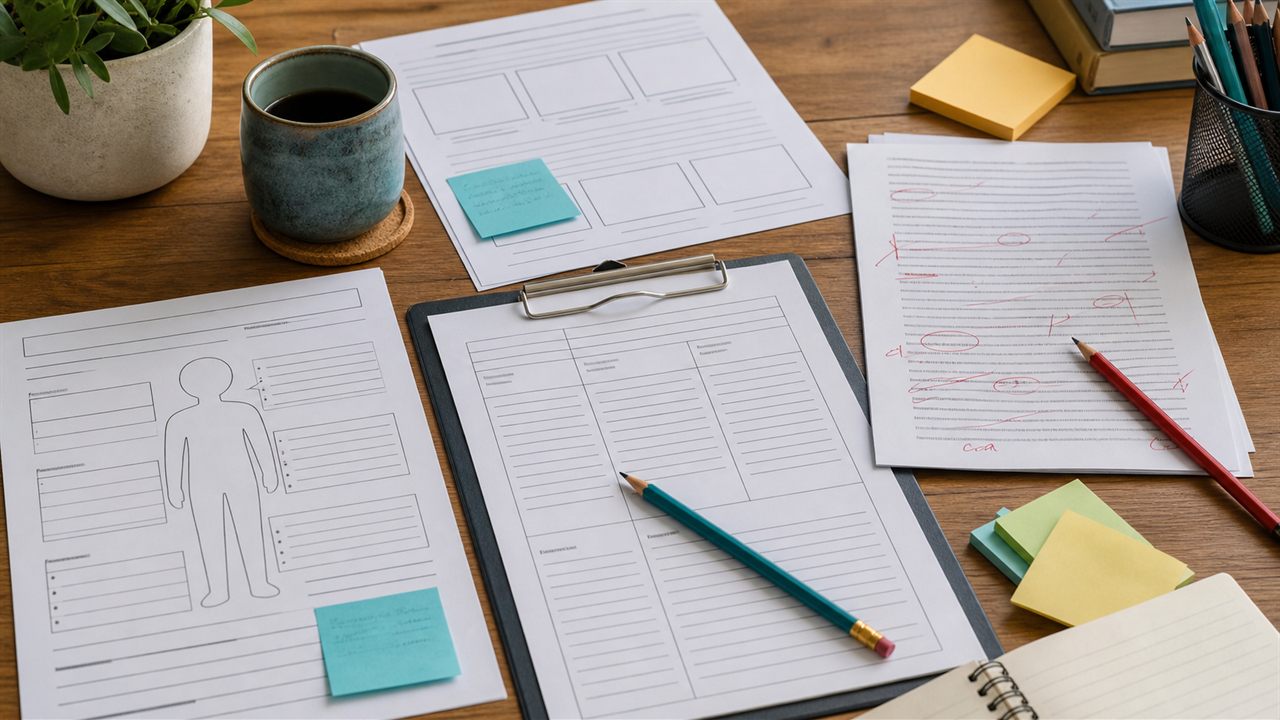
Use this worksheet when a draft needs backstory but the memory keeps stopping the scene. A flashback should not exist only to explain a character. It should change what the reader understands about the present problem.
Before adding the flashback, name the present-scene pressure. If the story can keep moving without the memory, summarize less or save it for later. If the memory changes a choice, fear, promise, clue, or relationship, plan it deliberately.
Flashback decision test
Answer these before drafting the memory.
Present scene or chapter where the memory appears:
Problem happening in the present:
What the reader needs to understand now:
Why the reader needs it here, not earlier:
What would be weaker if the flashback were removed:
Trigger and entry
The cleanest flashbacks usually enter through a present detail: an object, phrase, smell, wound, place, repeated action, or mistake. The trigger should feel like pressure, not a button labeled “backstory.”
Present detail that triggers the memory:
Emotion the character is trying to avoid:
First image inside the memory:
Point of view and distance:
Line or action that returns the scene to the present:
If the flashback depends on who remembers and what they misread, use the narrative point of view guide before drafting. If the memory is mostly thematic, use story theme questions to decide what idea the memory should complicate.
Memory job
Choose one main job. A flashback that tries to do everything often reads like a pause.
- Reveal the origin of a fear, promise, wound, skill, lie, or rule.
- Reframe a relationship the reader already understands one way.
- Explain why a current choice costs more than it appears.
- Plant a clue, contradiction, or pattern that changes a later scene.
- Show how the character has changed since the remembered moment.
Shape the flashback
Memory beginning:
Pressure inside the memory:
Choice, failure, discovery, or image at the center:
Memory ending:
Present consequence after the memory:
Keep the memory as short as its job allows. If the flashback has its own scene arc, give it a beginning, pressure point, and exit. If it only provides one essential fact, use a paragraph or a few sentences instead of a full scene.
Placement options
Before a choice
Use the memory before a decision when it makes the choice harder or more revealing. The danger is explaining the character before they act. Let the memory sharpen the action, not replace it.
After a surprising reaction
Use the memory after a character overreacts, freezes, lies, or refuses something. The danger is draining mystery too soon. Leave enough unanswered for the reader to keep leaning forward.
Between chapters
Use a flashback chapter only when the past event has enough conflict to carry a chapter shape. Test it with the chapter planning worksheet so it does not become a history lecture.
During revision
If beta notes say “I do not understand why this matters,” add the smallest flashback that clarifies motive or cost. If beta notes say “the story slows down here,” cut or move the memory before adding more explanation.
Revision checks
- Does the flashback answer a question the reader already has?
- Does the present scene change after the memory?
- Is the memory triggered by something concrete in the present?
- Could one remembered image do the job of a full flashback?
- Does the viewpoint stay consistent with who is remembering?
- Does the reader return to a sharper present problem?
After drafting, use the scene revision checklist if the memory reads like a static scene. Use the revision checklist if the flashback affects continuity across multiple chapters.