Why Romantasy Hooks Readers
A visual-style breakdown of why romantasy feels popular, what story promises it makes, and how writers can borrow the pattern.
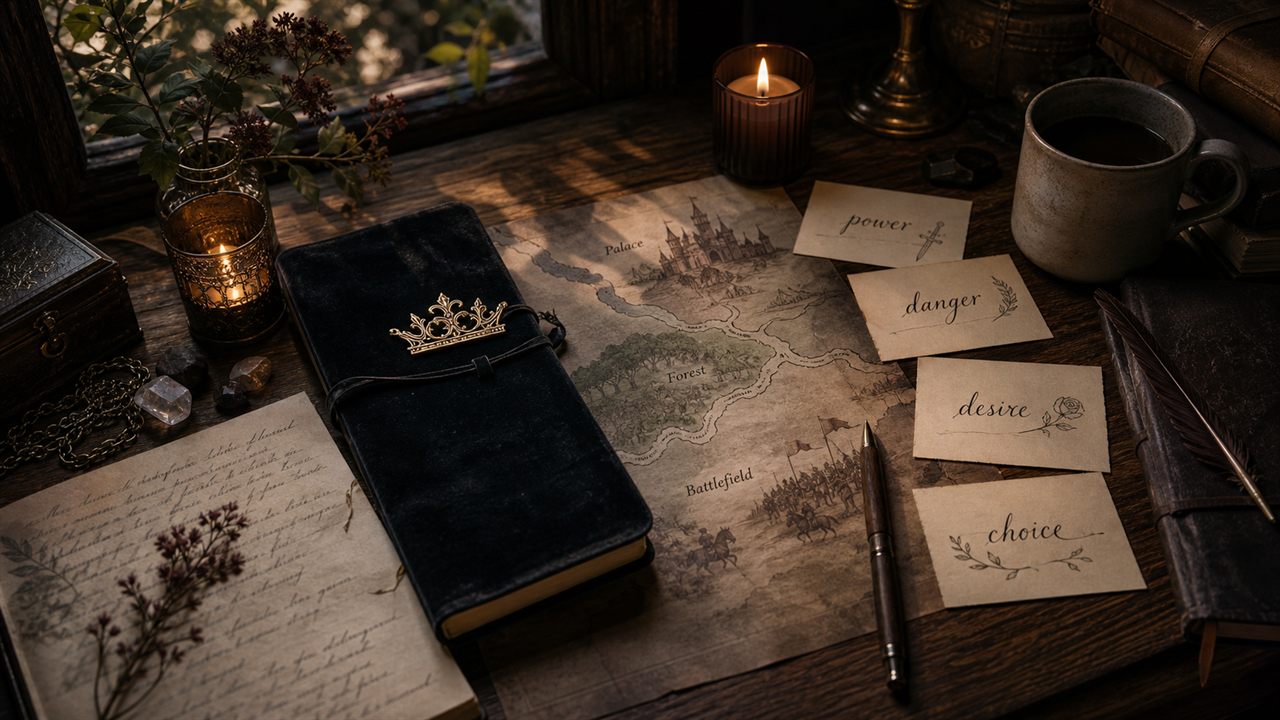
Romantasy works because it combines two powerful promises: the emotional intensity of romance and the scale, danger, and wonder of fantasy. Readers are not only asking whether two people will choose each other. They are also watching whether that choice can survive magic, power, politics, prophecy, monsters, duty, or a world that makes love expensive.
The appeal at a glance
Why the blend is sticky
Romance gives the story a clear emotional question: will these characters trust, choose, forgive, or risk themselves for each other? Fantasy gives that question a larger arena. A confession can change a kingdom. A betrayal can awaken a curse. A private desire can collide with a public destiny.
That combination creates useful pressure for writers:
- The relationship can reveal character faster than exposition.
- The worldbuilding can make love feel dangerous instead of decorative.
- The fantasy conflict can externalize emotional fear: control, abandonment, forbidden identity, class difference, power imbalance, or sacrifice.
- The romance can keep a large fantasy plot intimate and readable.
Borrow the pattern without copying the surface
Writers do not need crowns, dragons, academies, or fae courts to learn from romantasy. The reusable pattern is simpler:
- Give the character a desire that feels personal.
- Put that desire inside a system that makes it costly.
- Create a relationship that exposes the character’s strongest hope and worst fear.
- Let the external plot force an internal choice.
Common risks
The genre blend can feel thin when the fantasy side is only wallpaper or when the romance side exists only to decorate a quest. The stronger version makes both engines change each other. The magic system should affect intimacy. The relationship should affect strategy. The world should make the choice harder.
Writing prompts from the pattern
- A character is expected to inherit power, but the person they trust most would be harmed by that inheritance.
- A magical bond reveals truth but not motive, forcing two rivals to interpret each other under pressure.
- A kingdom rewards emotional control, and the protagonist’s strongest magic appears only when they lose it.
- A dangerous alliance begins as strategy, becomes comfort, then becomes the one weakness an enemy can exploit.