Why The Odyssey Still Feels Like Event Cinema
A source-backed trend breakdown of why Christopher Nolan's Odyssey adaptation is drawing attention, and what writers can learn from quest structure, homecoming, and prestige hype.
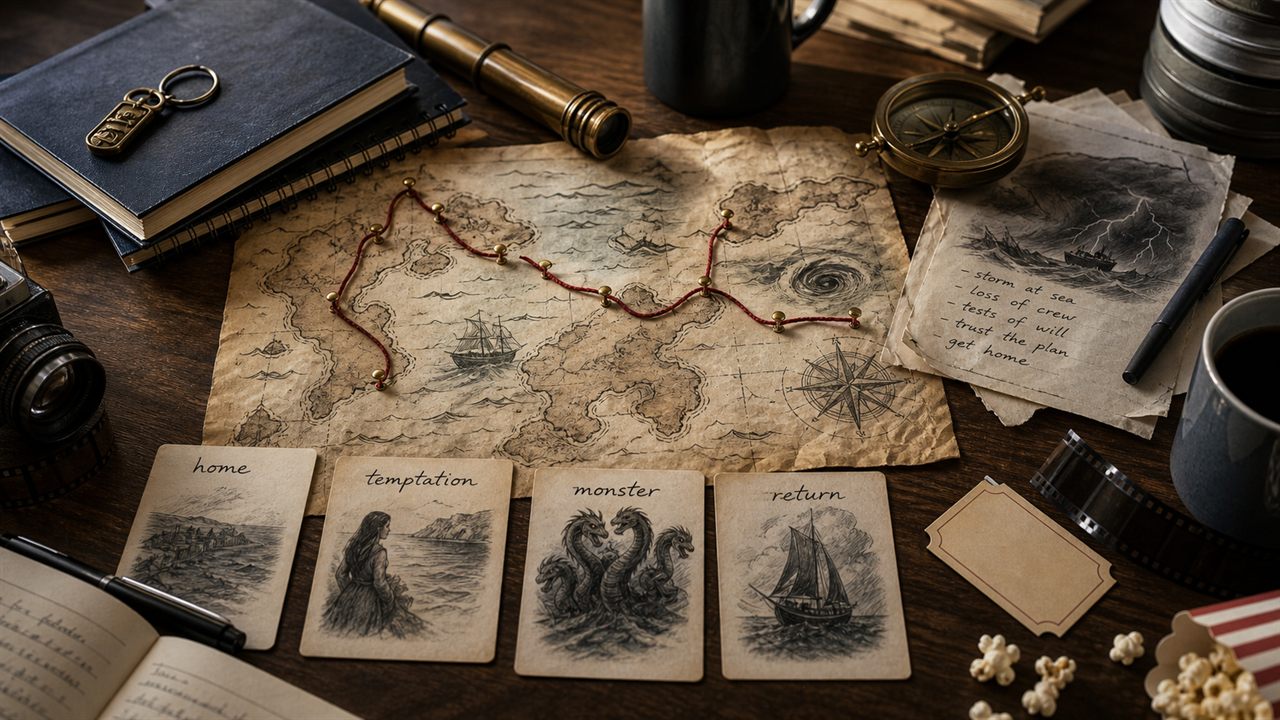
Christopher Nolan’s The Odyssey is a useful kind of pop-culture event for writers because the public hook is not only “a famous director adapted a famous poem.” It is a collision of older story memory, large-format spectacle, review-window strategy, and a simple emotional engine: a person tries to get home after the world has made that almost impossible.
The official movie site lists the film for July 17, 2026 and describes it as shot entirely with IMAX film cameras. NBCUniversal’s trailer note also frames the production as a mythic action epic filmed across international locations and says the fully IMAX approach was a long-held ambition for Nolan. Meanwhile, recent coverage from Wired and The Hollywood Reporter has focused on Universal’s decision to skip early influencer-only screenings, putting critic reaction at the center of the pre-release conversation instead.
That is why this is bigger than a trailer cycle. The current conversation is about who gets to explain a prestige blockbuster first: critics, influencers, fans, or the ancient story itself.
Why this story is easy to market
The first advantage is recognition. A familiar title lowers the cost of entry even for people who have never read the poem closely. Most casual viewers know the shape: voyage, monsters, temptation, longing, return. That shape is enough to make the trailer legible.
The second advantage is scale. A quest story can promise a new place every few scenes. It has storms, islands, tests, strangers, disguises, and thresholds. A studio can sell size without explaining every plot turn.
The third advantage is moral pressure. The Odyssey is not only a map story. It is a reputation story, a marriage story, a survival story, and a pride story. Odysseus wants home, but the journey keeps asking what kind of person gets to arrive there.
That mix explains why current coverage can bounce between format, release strategy, audience anticipation, and mythic argument without losing the thread. The ancient source gives everyone a shared doorway.
The quest engine underneath
A quest works when every outward stop changes the hero’s inward problem. If the voyage is only a sequence of obstacles, the middle becomes a travel brochure with hazards. If each obstacle tests a different weakness, the journey starts to feel inevitable.
This is the craft reason The Odyssey keeps coming back. “Get home” is a clean external goal, but it can hold almost any internal conflict: arrogance, grief, duty, appetite, guilt, fear of aging, fear of being forgotten, or the wish to be admired more than loved.
For writers, that is the useful distinction. A trip is geography. A quest is pressure.
Why the screening strategy became part of the story
The critic-versus-influencer discussion matters because it mirrors the movie’s own promise. A giant mythic adaptation wants to feel like an event that deserves judgment, not just instant reaction. That does not make critics automatically right or influencers automatically shallow. It does show how release strategy can become narrative framing.
That is a helpful lesson for any story launch inside fiction too. Characters do not only act. Other characters interpret them. A ruler, warrior, artist, detective, or public figure becomes more interesting when the story controls who gets the first interpretation: a friend, enemy, crowd, institution, witness, or rumor.
What writers can borrow
Use the Odyssey pattern when your story needs movement, variety, and a large emotional destination.
- Give the hero a destination that means more than arrival. Home, freedom, truth, safety, forgiveness, or public vindication all work if the place carries emotional weight.
- Make each stop test a different flaw. Repeating the same danger makes the middle sag; changing the moral question keeps it alive.
- Let temptation be attractive. A weak temptation is just a warning sign. A strong one offers the hero something they genuinely want.
- Put reputation under pressure. Quests get sharper when the hero is watched, misread, praised for the wrong reason, or remembered incorrectly.
- Make the return strange. If home feels exactly the same after the journey, the story has not spent its voyage well.
Pair this with the hero journey writing template when you need a clean mythic arc, the fantasy quest template when you need stops and trials, and the plot builder when the middle needs stronger reversals. If the voyage depends on places that change the hero, use the worldbuilding hub to turn each location into a pressure system instead of scenery.
Visual plan for this article
Use original generated or diagrammatic visuals only. Do not copy trailer frames, posters, actor portraits, studio stills, official logos, or social screenshots into the repo.
- Hero image prompt: “Cinematic editorial writing desk for a quest-structure article: ancient sea map, storm sketches, red thread route markers, brass compass, blank character cards labeled home, temptation, monster, return, moody daylight, no logos, no actor likenesses.”
- Quest map prompt: “Clean editorial infographic of a circular voyage structure: departure, tests, temptation, loss, recognition, return; sea blue, bronze, parchment, modern readable labels, no movie imagery.”
- Character pressure prompt: “Abstract hero pressure triangle with home duty, survival instinct, and pride/status as three forces; mythic but modern icons, no copyrighted characters, no Greek statue likeness.”
- Release-strategy card prompt: “Three-column social explainer showing critic prestige, social reaction, and myth memory feeding into event-cinema anticipation; restrained editorial palette, no brand marks.”
Risks to avoid
The cheap version of a quest mistakes distance for drama. A hero can cross oceans and still feel static if the story only changes the background. The stronger version makes each stop remove an excuse.
There is also an adaptation risk. A myth this famous can turn into a checklist of recognizable incidents: monster, storm, temptation, homecoming. The better question is what each incident proves about the person trying to return. Spectacle can sell the ticket, but transformation is what makes the voyage feel earned.
For current coverage, avoid turning casting, cultural ownership, or review-window arguments into bait. The safer and more useful Story Draft Lab angle is the story engine: why ancient quest structure still gives modern audiences a big, readable emotional promise.